The capacity problem
Biomanufacturing is expensive to build.
Promising protein programs can reach a point where new capacity requires a large, fixed facility, years before demand is fully known.
Where progress slows
Capital becomes the bottleneck.
When manufacturing begins with a major construction decision, financing and scale-up become inseparable. New sites become difficult to fund and leave little room to learn.
The Asterix answer
Replace the facility with modular units.
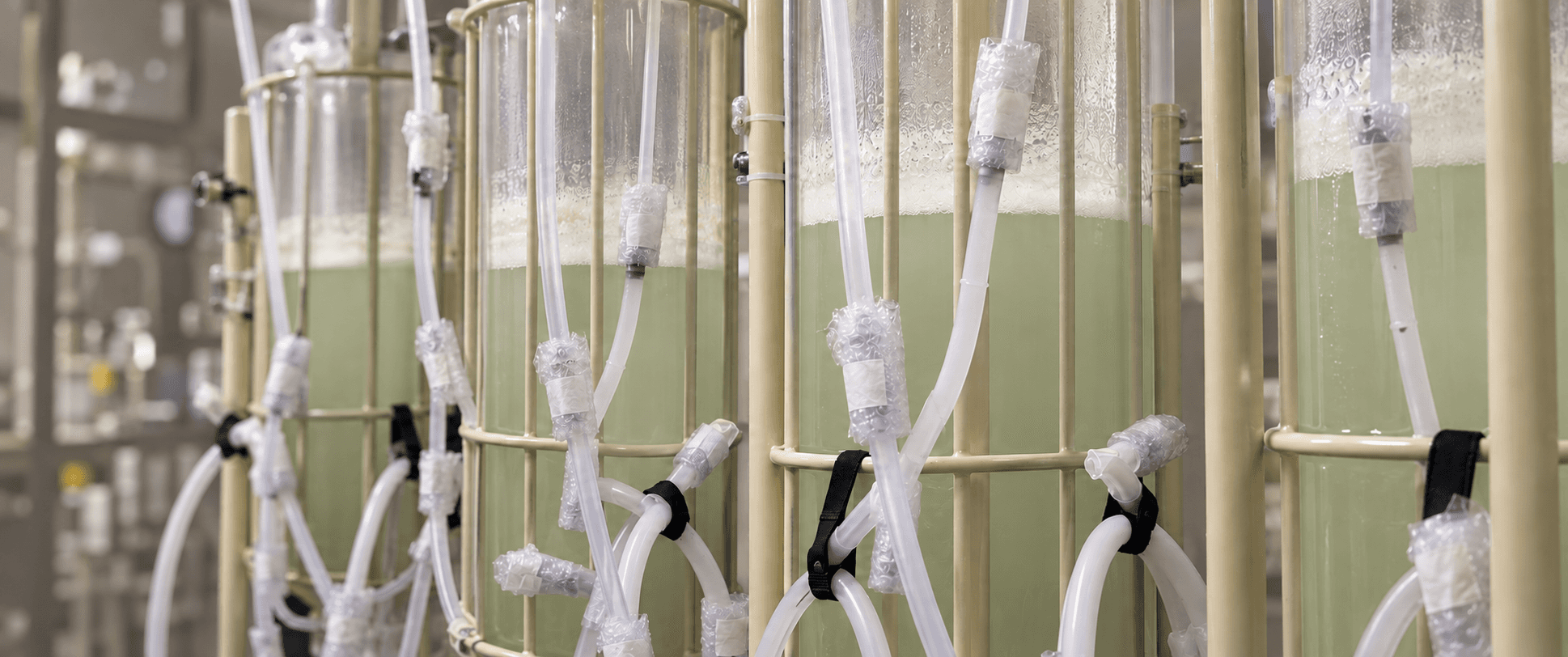
Asterix grows plant cells in disposable plastic bioreactor units. Capacity is added by repeating proven units, not by building one enormous stainless-steel facility.
Scale by repetition
Start with the capacity you need.
Deploy a smaller production footprint, validate demand, then expand by adding units. Manufacturing capacity grows alongside the market.
Biology that performs
Complex proteins, practical production.
Plant cells provide eukaryotic protein folding and post-translational processing. The platform is designed around functional quality, not expression yield alone.

From target to production
A development path built for scale-out.
We can join at any stage, from identifying the right protein target to developing a process that performs on the Asterix platform.